Posts

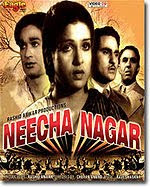
दास्तान ‘नीचा नगर’ की
Image
राजेंद्र बोड़ा 'नीचा नगर' फिल्म हमेशा ही गुमनामी के अँधेरे में रही. वास्तव में वह दर्शकों तक कभी पहुच ही नहीं सकी. इतने बड़े देश में जहाँ सबसे अधिक संख्या में फ़िल्में बनती है और हर तरह की ऊल-जलूल फ़िल्में सिनेमाघरों के पर्दों पर उतरती हैं वहां इस फिल्म को रिलीज करने वाला कोई नहीं मिला. ऐसा उस फिल्म के साथ हुआ है जिसको अंतर्राष्ट्रीय 'कान्स फिल्म समारोह' का लब्धप्रतिष्ठ 'ग्रां प्री' का खिताब अर्जित करने का गौरव प्राप्त है. फिल्म 1946 में बन कर तैयार हुई और उसी साल शुरू हुए अंतर्राष्ट्रीय 'कान्स फिल्म समारोह' में उसने अपना परचम फहराया. जब प्रधानमंत्री जवाहरलाल नेहरु को पता चला कि एक भारतीय फिल्म ने अंतर्राष्ट्रीय खिताब जीता है तो उन्होंने यह फिल्म देखने की ख्वाइश जाहिर की . दिल्ली के तब 'वाइसरीगल लॉज', जो अब राष्ट्रपति भवन कहलाता है, में 'नीचा नगर' का एक शो रखा गया. शो में नेहरु जी के अलावा माउन्टबेटन दंपत्ति भी मौजूद थे. फिल्म के शो के बाद नेहरु ने फिल्म की खूब तारीफ़ की और माउन्टबेटन ने सलाह दी कि फिल्म के अंग्रेजी में सब-टाइटल तैयार किय...

Human Rights and Media

Rajendra Bora Although the concept of ‘Human Rights’ came into existence way back in 1948 with the United Nations’ Universal Declaration but the National Human Rights Commission came into existence in India forty-five years later, in 1993, when ‘The Protection of Human Rights Act’ was enacted by Parliament. The State Human Rights Commissions came into existence much later. One might wonder why the enactment of law by Parliament was delayed for 45 years? It is because no such necessity was felt. Many of the Articles of the Universal Declaration of Human Rights had already found place in the Fundamental Rights in the Indian Constitution. The Indian Constitution is one of the classical documents of its kind and has been drafted in such a systematic and simplified manner that is easy to understand, even for a layman. Than why Human Rights are being flouted so rampantly? Has the Constitution failed? No. They are the mortal being – We the People - have failed. What is the role of media in pr...

Misuse of Power by Police and Misuse of Police by Persons in Authority

Rajendra Bora I would like to begin by quoting management guru Arindam Chaudhury whose recent book has taken the Indian business world by storm. In his best selling book “Count Your Chikens Before They Hatch” Arindam tells an interesting observation about Japanese people in the chapter titled “Pegging Cultural Holes”. In Japan “when a man runs short of money in the market place and goes to borrow some from the policeman round the corner, he meets with a pleasant experience. The policeman might not even ask for his address, for, trust levels are too high and policeman knows that a Japanese would rarely cheat his country. When this is how a citizen is treated. In turn he also acts responsibly and reacts by picking up a wastepaper lying by the road and taking it home to throw in his dust bin”. It may sound a fairy tale to us Indians because the Police force is just not considered as a friend here despite all efforts made in the past to make it so. The overwhelming perception of the common...

Water tariff in Rajasthan poised for a steep hike

Rajendra Bora Jaipur.The water rates in Rajasthan are poised to go up steeply if the new draft of State’s Water Policy is adopted and implemented in letter and spirit. The new Policy being vigorously pursued by the Gehlot Government calls for “rationalization of Operation and Maintenance charges” by introducing “an effective differential water tariff” which will go “progressively upward towards full cost of operation and maintenance”. The Draft Policy document proposes to charge a “three or four stepped water tariff” with the highest rate for excessive use of water for different uses including agricultural, industrial, commercial and municipal purposes. The idea behind the stepped water tariff is to use the higher rates as a “strong disincentive” for “profligate water usages” “This stepped water tariff will be set to ensure magnitude difference in water rates between lowest and highest rates”, the Draft Policy says adding that “the first stepped rate of relatively cheap water will be c...

दास्तान कागज़ के फूल की

Image
राजेंद्र बोड़ा जिस प्रकार सफ़ेद कागज़ पर पेन या पेंसिल से लिखा जाता है वैसे ही सिनेमा में सफ़ेद परदे पर कैमरे से लि-खा जाता है. एक मायने में सिनेमा का पर्दा सफ़ेद कागज़ का बड़ा रूप है. कागज़ पर क्या लिखा गया है यह लिखने वाले पर निर्भर करता है. एक अनाड़ी का शब्दजाल भी उस पर लिखा जा सकता है तो शब्दों और अनुभूतियों का कोई धनी उस पर कोई कालजयी रचना भी उकेर सकता है. कागज़ पर लेखक लिखता है और सिनेमा के परदे पर छायाकार लिखता है. मगर सिनेमा साझेदारी वाली कला है जिसमें कई कलाओं का संगम होता है. विभिन्न कलाओं के महारथी मिलकर एक नयी सिनेमा कला का सृजन करते हैं. मूर्त, अमूर्त चित्र कलाओं के आयामों से आगे जाकर छायाचित्र और उससे भी आगे जाकर चलचित्र अपना यथार्थ रचता है. सिनेमा में यह यथार्थ कैमरे से उकेरता तो छायाकार है मगर उसका सृजक निर्देशक होता है. निर्देशक की कल्पना परदे पर तभी पूरी साकार होती है जब छायाकार और उसकी समझ में सम्पूर्ण साझा हो. ऐसी ही साझेदारी निर्देशक गुरुदत्त और छायाकार वी. के. मूर्ति के बीच थी जिसने गुरुदत्त की कालजयी फिल्मों की रचना की. मूर्ति को इस साल के दादा साहेब फाल्के पुरस्कार क...

The man to whom Rajasthan owes its food security

Image
Rajendra Bora Jaipur. Rajasthan too ows its gratitude to agricultural scientist Norman Borlaug who died at Dallas in Texas, United States Saturday last at the age of 95. The genetic plant breeder worked in Rajasthan in 1960s on ‘Intensive Agriculture Development Project’ bringing green revolution in the desert state by growing high yielding wheat varieties that more than tripled the harvest. Rajasthan was selected as the one of the seven projects in the country where the new varieties of wheat, developed by Borlaug in Mexico, were to be planted for advanced generations in 1963 under his personal monitoring after the scientist was invited to India by the Ministry of Agriculture on a suggestion of noted Indian agricultural scientist M.S.Swaminathan. Pali district was selected for the Rajasthan Project because better irrigation facilities were available there from Jawai Dam and Takhat Sagar Dam, recalls Rajveer Singh, retired Additional Director Agriculture. The Pali areas of Bali, Rani, ...

Will Rajasthan Police learn something from MIT project

Rajendra Bora Jaipur. It is full one year after completion of a three year collaborative project between the Rajasthan Police and the Massachusetts Institute of Technology (MIT), United States. And it is the time for looking back and evaluate if the exercise really succeeded in enhancing performance, and improve public perception of the state police? The ambitious project was claimed to be the first rigorously evaluated police reform project in the world. The project started in September 2005 was over in June 2008. It was considered as a first genuine effort of administrative reform where a government department willingly opened itself to a neutral agency to identify the areas of concern in their basic field unit and rigorously evaluate the effectiveness of reform to provide a responsive, accountable and transparent police to citizens. During the course of project around 350 investigation officers – Inspectors, Sub-Inspectors and ASI’s – were trained at Rajasthan Police Academy for imp...